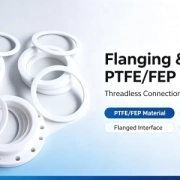
What are Fluoroplastics?
Fluoroplastics are an important category of plastics, which are alkane polymers with some or all of the hydrogen replaced by fluorine. People usually recognize fluoroplastics from contact with the king of plastics – polytetrafluoroethylene (PTFE). In fact, PTFE is only the largest production and use of fluorine plastic varieties, in addition, commonly used fluorine plastics are: tetrafluoroethylene and perfluoro (n) propyl vinyl ether copolymer (PFA), polyperfluoroethylene propylene (FEP, commonly known as F46), ethylene tetrafluoroethylene copolymer (ETFE, commonly known as F40), polyvinylidene fluoride (PVDF), polytrifluoroethylene (PCTFE), Polyvinylidene fluoride (PVF), tetrafluoroethylene-hexafluoropropylene-vinylidene fluoride copolymer (THV) and so on.

1 Fluorine plastic properties
Fluoroplastics have excellent dielectric properties and chemical resistance, high and low temperature resistance, waterproof, non-stick, low coefficient of friction, good self-lubricating properties. At present, it has been widely used in chemical, electronic, electrical, aviation, aerospace, semiconductor, machinery, textile, construction, medicine, automotive and other industrial fields.
2、History of fluorine plastic development
China’s fluorine plastic molding industry is the end of the 50’s, the early 60’s began to develop, 60’s, 70’s is mainly used in the defense industry, into the 80’s after the strengthening of the civil-military integration and promotion of the application of work, so that fluorine plastic molding and processing industry has been rapid development. After 40 years of efforts, our manufacturers have basically mastered the main molding and processing methods. Such as molding, isobaric molding, extrusion molding (plunger extrusion molding, spiral extrusion molding and paste extrusion molding), transfer molding, rotational molding, expansion molding, impregnation, spraying, chemical plating, blow molding, injection molding and other molding processing methods. Its products have been widely used in various fields of national economy.
3 Fluoroplastics varieties and applications
Fluoroplastics are produced by homopolymerization or copolymerization of fluorine-containing monomers such as tetrafluoroethylene, hexafluoropropylene, trichloroethylene, vinylidene fluoride, fluoroethylene, hexafluoroisobutylene, perfluoroalkyl vinyl ether and vinyl, etc. The main varieties of fluoroplastics are as follows, but PTFE is the most important in terms of quantity and application. The main varieties of fluoroplastics are as follows, but PTFE is the most important in terms of quantity and application.
Fluoroplastics represented by F4 have a series of excellent characteristics, high temperature resistance, long-term use of temperature up to 200 ℃; low temperature in -100 ℃ is still soft, corrosion resistance can be resistant to aqua regia and cut organic solvents; weather resistance has the best aging life in plastics; high insulating volume resistance of 1018 ohm-cm, and dielectric properties are almost independent of the temperature and frequency changes; high lubrication has the smallest coefficient of static friction in plastics; non-adhesive to the plastic, the coefficient of static friction, the coefficient of static friction is the lowest. High lubrication has the smallest coefficient of static friction among plastics; non-adhesion has the smallest surface tension among solid materials and does not adhere to any substance; non-toxic with physiological inertia, suitable for contact with blood. Because of the above practical properties of fluoroplastics, it can be used in many areas of the national economy. Such as chemical anti-corrosion pipeline and equipment on the lining and coating, ultra-pure material over the L material, high and low temperature resistant hydraulic transmission hose, resistant to a variety of harsh environments of the sealing gaskets, low friction bridge expansion slider, all kinds of oil-free lubrication piston ring, high-temperature and high-frequency electronic instrument insulation, flexible cable, high-level printed circuit boards, the thermal performance of the compression voltage materials, oil-free cooking and drinking utensils, mold coating, human blood vessels and heart and lungs The use of the material in these fields is only a representative example of its use. It is fully believed that with the progress of processing technology, there will be more fluoroplastic products applied in various sectors of the industry.

  When discussing the physical properties of fluoroplastics, it is known that fluoroplastics, due to its high fluorocarbon bonding energy and the shielding effect of fluorine atoms, have excellent chemical corrosion resistance, dielectric properties, weather resistance, non-flammable and non-sticky, low coefficient of friction, and a wide range of temperatures and other properties, and are therefore widely used in corrosion prevention, sealing, supporting loads, anti-adhesion, electrical insulation, medical and health care, and household goods, and has become a modern cutting-edge science and technology, and has been used in a variety of sectors. Fluoroplastics are widely used in anti-corrosion, sealing, load support, anti-adhesion, electrical insulation, medical and health care, household goods, etc. They have become one of the indispensable and important materials in modern cutting-edge science, national defense industry, electrical and electronic industry, chemical industry and mechanical industry.

    Fluorine plastic occupies a very small proportion in the whole plastics, but it is an indispensable variety in the process of China's four modernizations. With the continuous development of economic construction, fluorine plastic will certainly gain rapid development.F4 corrosion-resistant piping and its fittings F4 piping can be used as a pipeline to transport corrosive or viscous liquids, but also as a corrosive gas pipeline, exhaust pipe and steam pipe. Because of the low mechanical strength of F4, poor pressure resistance, large coefficient of linear expansion, and, its mechanical strength due to the temperature and reduce the deformation is easy, especially when subjected to high temperatures and high pressures, the contradiction is more prominent, so the F4 pipe and pipe fittings must be reinforced with glass fiber reinforced plastic or metal pipe. The connection between them all adopts F4 pipe belongs to tight lining pipe, that is, FRP and F4 pipe bonded into a whole. It can overcome the problems caused by different coefficients of linear expansion between different materials, and can be used as the transmission pipeline of the negative pressure system, and can prevent the corrosion of the pipeline by the atmosphere and the environment. Due to some fluids in a certain flow rate and the wall of the pipe often friction, easy to produce static electricity and lead to pipe wall breakdown, should take the potential of the same conductive measures to prevent, or in the molding of the inner tube and its fittings when adding an appropriate amount of carbon ink, in order to prevent the generation of static electricity and reduce the size changes caused by thermal expansion and contraction.
4.Characteristics of Fluoroplastics in detail
Fluorine plastic has heat-resistant, cold-resistant, weather-resistant, drug-resistant, solvent-resistant, excellent insulating properties and high-frequency electrical properties. And has no wither, self-lubrication, low friction coefficient and other characteristics.
Polytetrafluoroethylene, perfluoro (ethylene-propylene) copolymer (FEP) is composed entirely of carbon and fluorine atoms, while polyvinylidene fluoride (PVDF), polyvinylidene fluoride (PVF) molecules also contain hydrogen atoms, and polytrifluoroethylene also contains chlorine atoms. The excellent performance of fluoroplastics is realized by the high binding energy between carbon and fluorine atoms. The backbone of the main chain of PTFE is carbon atom, and the surrounding is completely surrounded by fluorine atoms, so it has the highest performance, while PFA, FEP, ETFE and other varieties due to the influence of the side group, the softening point is lower than PTFE, and the other properties have also changed.- Thermal properties: Fluoroplastics have flame retardant and excellent heat resistance, PTFE and PFA can be used continuously up to 260 ℃, short-term can be used at 300 ℃, the use of FEP temperature is 60 ℃ lower than them, PCTFE can be used at a maximum of 120 ℃. Fluorine plastic such as long-term use at high temperatures will cause changes in crystallinity, especially in the manufacture of equipment lining must be noted.
- Drug resistance: Fluoroplastics have excellent drug resistance and solvent resistance, especially PTFE, PFA, FEP, etc., acid, alkali, solvents on them are not leaching. But molten alkali metals, fluorine, CFCs have different degrees of influence on them. pctfe, etfe, pvdf, etc. in fluoroplastics, drug resistance is slightly worse, but the corrosion resistance than other plastics is still much better.
- Electrical properties: the electrical properties of fluoroplastics, especially the high-frequency electrical properties of other materials is difficult to match. PTFE, FEP, PFA molecular polarity is very low, in a wide range of temperatures, frequency interval changes are very small, the relative dielectric constant is stable, the dielectric loss is very low, excellent electrical insulation. Among them, PVDF also has special piezoelectricity and pyroelectricity, can be used to manufacture piezoelectric materials.
- Mechanical properties: fluorine plastic molecules containing hydrogen, chlorine atoms increase its tensile strength is also improved. PTFE and PCTFE brittleness temperature is very low, showing excellent low temperature performance. PTFE has the lowest coefficient of friction and special self-lubricating properties. However, PTFE has its own disadvantages such as high abrasion and cold flow. Can be used to fill a variety of fillers to improve wear resistance, to overcome the cold flow.
- Non-sticky: fluoroplastics have special non-stick. Especially like PTPE, FEP, PFA and other molecules with high fluorine content, the surface contact angle is very large, so that the liquid on the surface of fluoroplastic products into a ball. It is not easy to bond with resin, so it is often used to make cookware surface non-stick Xu layer.
- Weather resistance: all varieties of fluoroplastics have excellent weather resistance, even in harsh temperatures under prolonged exposure to the sun, its various properties are unchanged.
- Hydrophobicity: Fluorine plastic has a low water absorption rate, especially PTFE. It can be utilized to make air-impermeable composite fabrics and other equipment with its hydrophobicity.
5.Detailed application introduction of fluoroplastics
   Polytetrafluoroethylene (PTFE) is the most used variety of fluoroplastics at present, accounting for about 60% of its total demand, and it is trusted by users for its excellent performance. Other fluoroplastics are also expanding their applications in semiconductor, medical, wire covering and other fields. The uses of fluoroplastics can be summarized as follows:

 1. The use of its drug resistance: fluoroplastics in the drug resistance of the application has long been not limited to the manufacture of seals, gaskets, fittings, in other parts that require corrosion resistance (such as piping) on the use of the star is also increasing. With the advancement of raw materials and processing technology, fluoroplastics molding methods and expand the range of factory options: such as injection molding can significantly improve production efficiency, small batch production can be used in the cutting process, PTFE bonding and welding technology development to make large-scale storage tanks and equipment lining has the possibility of FEP powder coating process to make the process more flexible and convenient. Semiconductor production process to prevent corrosion and pollution has been more fluoroplastics.

 2. Mechanical industry: PTFE has a small coefficient of friction, and its static coefficient of friction is lower than the dynamic coefficient of friction, so it can be used in the field of low-speed and high-load, such as in civil engineering, chemical industry, bridges and other structural components to solve the expansion and contraction problems caused by thermal expansion and vibration. Specific applications are:
        A. Bearing bushings for anti-pollution machinery (such as textile, paper, pharmaceutical, food machinery);
        B. Machinery for conveying non-lubricated liquids such as alkali and solvents (e.g. mixers, dyeing machines, pumps);
       C. In acid, alkali and other corrosive environments (such as electroplating bath chemical equipment) under the work of the sleeve;
       D. Oil lubrication is prohibited (such as oxygen equipment);
       E. Yuan oil lubrication (such as ultra-low-temperature freezers, liquid fuel pumps);
       F. Oil lubrication effect of poor environment (plus high temperature dryer, furnace table lunch, furnace conveyor belt) work of the sliding parts;
       G. Low-speed high-load condition of the sliding parts [movable support).

3. Electrical field: fluoroplastics are flame retardant materials, high critical oxygen index and corrosion resistance, can be used as the insulation layer of the wire.
ETFE, PVDF insulation resistance, insulation strength are high, mechanical strength is also excellent, can be used for computer, communication machine cable. The use of its weather resistance, irradiation resistance and other characteristics can be used for oil wells and nuclear reactors small cables. The use of its high-frequency relative dielectric constant and dielectric loss are low can be used for communications equipment, high-frequency electric instrumentation, PTFE and carbon black, carbon fibers such as conductive substances can be used as a mixture of anti-static materials and heating element materials. PVDF can also be made into piezoelectric elements used in the radio industry and instrumentation industry.
4. Non-stick: the use of fluoroplastics non-stick can be manufactured kitchen equipment (such as non-stick pans, snack molds), high-level building facade coating, foam molding molds, photocopier rollers and so on. In addition to artificial blood vessels, heart valves and other medical soil engineering materials, gas separation membranes, waterproof and breathable composite fabrics and other aspects of the use is also increasingly widespread.6.The molding characteristics of fluoroplastics
- 1.1Polytetrafluoroethylene (PTFE, F4) macromolecular carbon chains have highly electronegative fluorine atoms on both sides, which cannot be processed using ordinary thermoplastic injection molding methods because it almost does not flow when melted. Polytetrafluoroethylene is generally formed by compression molding, or by plunger extrusion molding. The resin obtained by dispersion polymerization can be extruded and rolled into shape using paste. The specific process conditions are as follows: the pre molding pressure varies with the shape and size of the product, but usually 9.8-34.3MPa is used, and the resin with filler material is 29.4-93MPa. For large blanks with a thickness of about 600mm in the direction of compression, a holding time of 20-30min is required.
In PTFE molding, there is also a hot pressing method where the sintered blank is placed in a mold preheated to the sintering temperature, pressurized and cooled at the same time; The automatic compression molding method using bidirectional extrusion and the equal pressure molding method using fluid pressure.
Extrusion molding is a method of using pre sintered PTFE material for rods, tubes, and profiles. Usually divided into vertical or horizontal types, but due to uneven filling of horizontal production pipe materials, vertical extrusion technology is often used. The process conditions are as follows:
A. The diameter of the round rod is 13 to 40mm, the mold size is 15.1 to 46.0mm, the heating length is 500-1100mm, the heating temperature is 400-350 ℃, the cooling length is 150-200mm, and the extrusion speed is 4-1m/h.
B. The diameter of the pipe is from 15 to 40/from 8 to 25, and the dimensions of the inner diameter of the material cylinder and the outer diameter of the core rod are from 16.5 to 44.5/from 8.9 to 27.8. The heating length is from 350 to 800, the heating temperature is from 400 to 350 ℃, the cooling length is from 150 to 250mm, and the extrusion speed is from 3.8 to 1.4m/h. The development direction of PTFE extrusion technology is to further improve extrusion speed and form multiple products in one go.
Disperse PTFE is usually formed by paste extrusion method. Firstly, the dispersed PTFE resin is mixed with extrusion additives such as crude solvent, gasoline (b. p. 90-120 ℃) or white oil, and rolled in glass or stainless steel bottles for 30 minutes to evenly disperse and absorb. It is left for 8-12 hours, pressed into a blank and placed in the extruder material chamber, with a pressure of 0.69-3.43 MPa and a holding time of 30-60 seconds. The extruded material made by the process needs to be continuously dried in a furnace (100-300 ℃) to remove the extrusion agent. After entering the sintering furnace for sintering (360~380 ℃) and rapid cooling, good products can be obtained.
After the paste is extruded from the small rod (diameter 10~diameter 30), it can also be sent to the rolling machine for rolling and film formation before sintering, which is called raw material belt product. The specific molding conditions are 100 parts resin, 27 parts additives, compression ratio (R, R) 30, machine head temperature 50 ℃, extruded product shape 50 × 14mm, rolling roller diameter 500mm, roller temperature 70 ℃, rolling speed 28m/min, and one-time rolling into 500 × 0.1mm raw material belt.
- Fluorinated resins other than polytetrafluoroethylene can be formed using thermoplastic resin molding methods such as molding, transfer molding, injection, extrusion, blow molding, etc.
A. Mold pressing method: This is an ancient plastic molding method. It is suitable for the production of products such as round bars, plates, and sleeves, as well as products with simple shapes and small batches.
B. Transfer molding method: Transfer molding is the method of closing the mold and then using high pressure to squeeze the formed material grease from the material groove into the mold to form the product. Fluoroplastic transfer molding is suitable for producing small and large batch products such as valves and pumps. Transfer molding can form high-precision products, but its disadvantage is that it consumes a large amount of raw materials. The molding pressure used is usually below 9.8Mpa, and the processing temperature is similar to the injection molding temperature.
C. Injection molding; Injection molding is the same as regular plastic. It is suitable for processing various products such as load-bearing devices, instrument connectors, sockets, fittings, winding shafts, irregular bearings, valves, pump casings, and impellers.
D. Extrusion molding: Extrusion molding is suitable for forming products such as films, pipes, rods, monofilaments, wire sheaths, etc.
Fluorine containing copolymers release trace amounts of monomers and thermal decomposition products during the molding process, so corrosion resistance is required for equipment and molds. Generally, gold containing materials such as H alloy are used for manufacturing.
The coating formation of fluoroplastics includes various methods such as dispersion coating, body coating, electrostatic coating, flow impregnation, etc. Regardless of the method, the substrate surface needs to be degreased, cleaned, and roughened by sandblasting.
The thickness of the coating can be sprayed repeatedly until it reaches the required thickness (currently at 0.35mm/time, with a final thickness of 2mm). Fluoroplastic products can undergo secondary processing, and the processing conditions are: cutting speed: below 200r/min when the diameter of the workpiece is between 200mm and 500mm, and 750-800r/min when the diameter is below 50mm. The front angle of the turning tool should be greater than 20 °~45 °, with a feed rate of 0.5mm/r for rough machining and 0.01mm/r for precision machining.
7.Introduction to the classification of various fluoroplastics
- A. Performance and Application of Polytetrafluoroethylene [PTFE, F4]
PTFE is one of the most corrosion-resistant materials in the world today, earning it the nickname of “plastic king”. It can be used in any type of chemical medium for a long time, and its emergence has solved many problems in China’s chemical, petroleum, pharmaceutical and other fields. PTFE seals, gaskets, and sealing washers are made by using suspension polymerized PTFE resin for molding. Compared with other plastics, polytetrafluoroethylene has excellent chemical corrosion resistance and temperature resistance, and it has been widely used as a sealing material and filling material.
Performance: It has high chemical stability and excellent resistance to chemical corrosion, such as strong acid, strong alkali, strong oxidants, etc. It has outstanding heat resistance, cold resistance, and friction resistance, with a long-term use temperature range of -200~+250 ℃. It also has excellent electrical insulation, and is not affected by temperature and frequency. In addition, it has the characteristics of non adhesion, non water absorption, and non combustion. Suspended resins are generally formed and processed by molding and sintering, and the resulting rods, plates, or other profiles can also be further processed by machining methods such as planing, drilling, and milling. The bar can be turned and stretched to produce oriented thin films.
Main uses: It can be made into other parts such as pipes, plates, rods, thin films, bearings, washers, etc. It is widely used in electrical, electronic, chemical, aviation, mechanical, national defense industries, and other fields.
B. Perfluorinated (ethylene propylene) copolymer [FEP, F46]
FEP is a copolymer of TFE and hexafluoropropylene (HFP). It is also a perfluorinated fluoroplastic, so its resistance to chemical media is not inferior. Like PTFE and PFA, FEP also has outstanding insulation performance. Combining its flame retardancy, low smoke generation, and ease of processing, FEP has become an ideal material for insulation of local area network (LAN) cables. It can withstand up to 205 ℃ and can be used as a heating cable, thermocouple, and high-temperature cable for automobiles.
C. Introduction to Fusible Polytetrafluoroethylene (PFA)
Also known as “perfluoroalkoxyfluoroplastics”, like PTFE, it is also a perfluorinated fluoroplastic that maintains all the excellent properties of PTFE. Unlike PTFE, PFA can be melted at lower temperatures. Of course, PFA is relatively expensive, so it is usually only used for special heating cables, thermocouples, and automotive high-temperature cables.
D. Ethylene tetrafluoroethylene copolymer [ETFE, F40]
It is the strongest and toughest fluoroplastic, with excellent scratch resistance and wear resistance. ETFE can also withstand high temperatures of 150 ℃, and cross-linked ETFE can withstand high temperatures of 200 ℃. At the same time, it is also one of the most difficult to process fluoroplastics. ETFE is mainly used for wires and cables that require flame retardancy, low smoke generation, chemical resistance, as well as abrasion resistance and wear resistance. Such as automotive, aviation, and heating cables.
E. Introduction to Trifluorochloroethylene Copolymer [FEVE]
The FEVE organic solvent based fluorine coating that emerged in the 1980s was a groundbreaking invention of fluorine coatings. In order to overcome the shortcomings of thermoplastic fluororesin coatings, in the 1980s, the United States and Japan successively developed fluororesins containing functional groups such as hydroxyl groups, which can be baked and crosslinked at medium and low temperatures (cross-linked with amino resin) and cured at room temperature (cross-linked with polyurethane). FEVE fluorine coating can be applied to various substrate surfaces at room temperature through common coating methods such as brush coating, roller coating, and spray coating. It not only has excellent weather resistance, but also excellent corrosion resistance such as solvent resistance, acid and alkali resistance. It can also improve pigment dispersion and solvent solubility, making fluorine coating have excellent decorative properties, greatly expanding the application range of fluorocarbon coating, and making it possible for fluorocarbon coating to be used in daily life.
In the 1980s, FEVE fluoro coating products (product number LUMIFLON) from a subsidiary of Asahi Corporation in Japan began to be widely used in fields such as airplanes, cross sea bridges, Shinkansen trains, transportation vehicles, building steel structures, and outdoor large structures. In 1983, the Dalian Municipal Science and Technology Commission began to focus on FEVE fluorocarbon coatings as a key scientific and technological research project. After 13 years, it developed FEVE fluorocarbon coating production technology with independent intellectual property rights and national patent (patent number: CN1145386) in 1995. In 1998, Dalian Mingchen Zhenbang Fluorocarbon Coatings Co., Ltd. successfully achieved industrialization and sold it under the registered trademark “ZEBON”, making China the third country in the world, after the United States and Japan, to produce FEVE fluorocarbon resins and reducing the cost of fluororesin coatings, forming suitable for building exterior walls, steel structures, bridges, automotive vehicles, woodworking, doors and windows, curtain walls, petrochemicals, and plastics. The series of products in industries such as products, furniture, and home appliances have been widely applied, pioneering the widespread application of fluororesin coatings, Making fluorocarbon paint cost-effective and of high quality a reality.
F. Characteristics and Applications of Polyvinylidene Fluoride [PVDF, F2]
Polyvinylidene fluoride is a crystalline high polymer with a low melting point, around 160-170 ℃; High mechanical strength, with wear resistance, cutting resistance, high temperature resistance, corrosion resistance, and good electrical performance (characterized by high dielectric constant). It also has excellent weather resistance, UV resistance, radiation resistance, and processing performance; At the same time, it has low processing temperature, good melting flow, and can be made into tubes, plates, rods, films, and fibers. Soluble in certain organic solvents.
Mainly used as: ① Ideal anti-corrosion material for chemical equipment, especially suitable for use in situations with acids, organic solvents, halogens, and their mixtures. ② Widely used in the electronics and electrical industry, such as as as the sleeve for electronic computer wires, aviation wires, and geophysical cables Used as an outer coating for optical fibers, high dielectric constant capacitor films, and electric heating strips.
G. A brief introduction to THV fluoroplastics
Has excellent chemical resistance and electrical properties. It is the softest fluoroplastic and its electrical performance is not suitable as the preferred insulation in high-speed data communication networks (i.e. Category 5 cables), but it has unique advantages in areas that require flexibility. In addition, THV can also be used in situations that require bonding with other materials. Due to its excellent optical performance, THV can also be used for fiber cladding